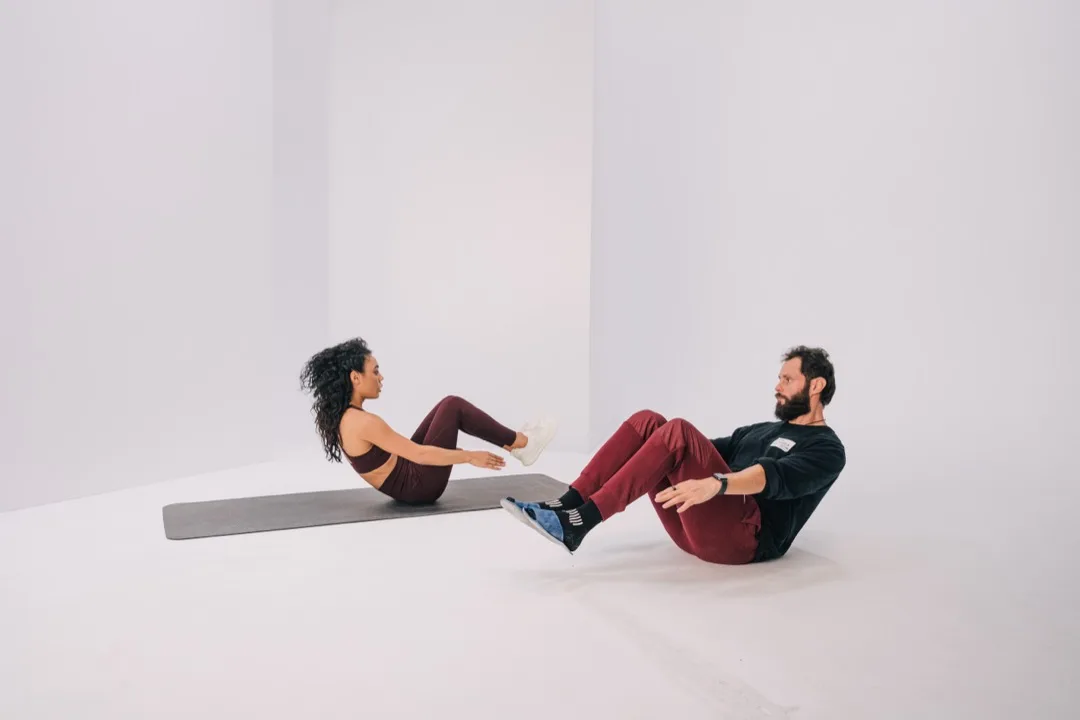
The brief: shoot 325+ exercises per model across two locations, in three formats simultaneously — vertical phone, horizontal tablet, 4K TV — without stopping to reframe between takes. Every production decision followed from that constraint.
1.5 months pre-production
Studio scouting, gym scouting, wardrobe, make-up, hairstyles, equipment selection, and 3D spatial previews to test how the final frame would work with app graphics — all before the crew arrived on set.
Casting as product design
References from Peloton, Freeletics, Nike Training Club, Fitness+, YouTube, and Instagram set the standard. We looked for models who could execute exercises cleanly, repeat takes consistently, and still feel natural on camera — not just look good in stills.
Three formats, one shoot
Footage was planned for vertical phones, horizontal tablets, and 4K TV. Shot at 60 fps with wide lenses and Blackmagic URSA Mini Pro 4.6K G2 — same camera, 12 mm and 16 mm, preserving maximum flexibility in post without reshooting.
On-set editing to prevent post issues
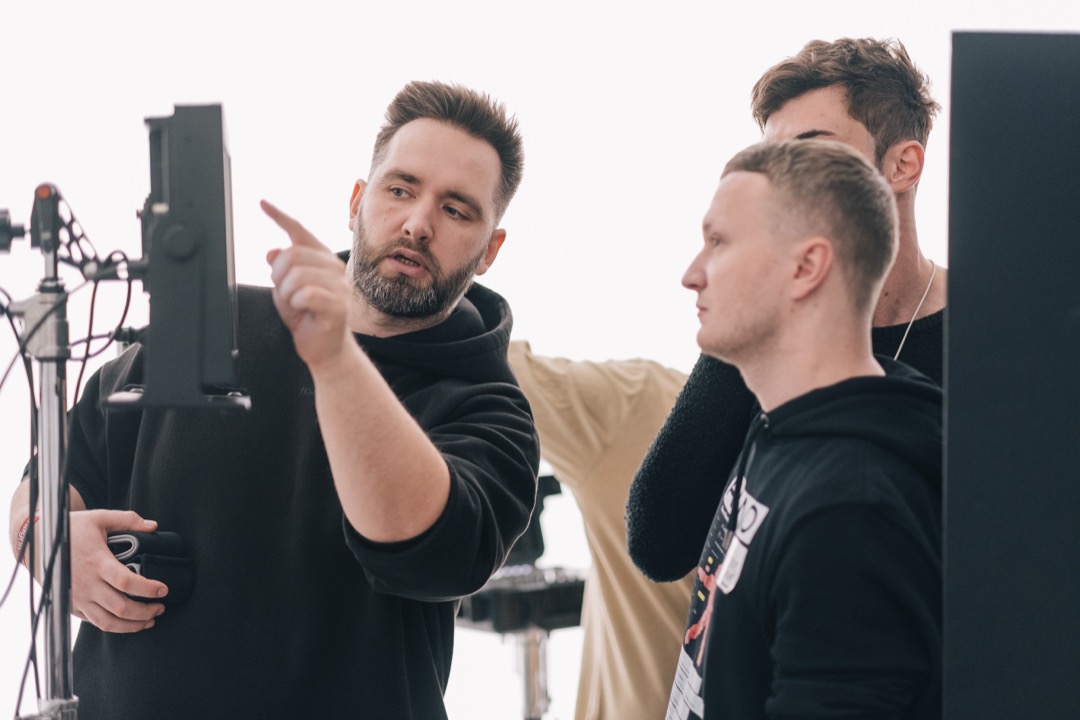
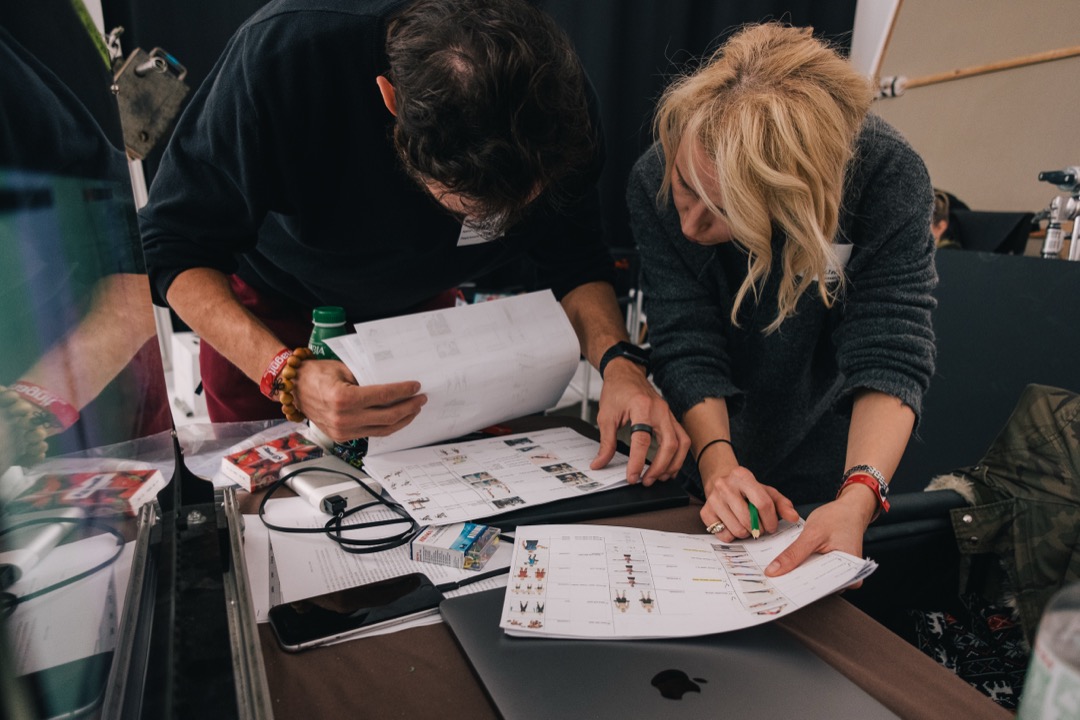
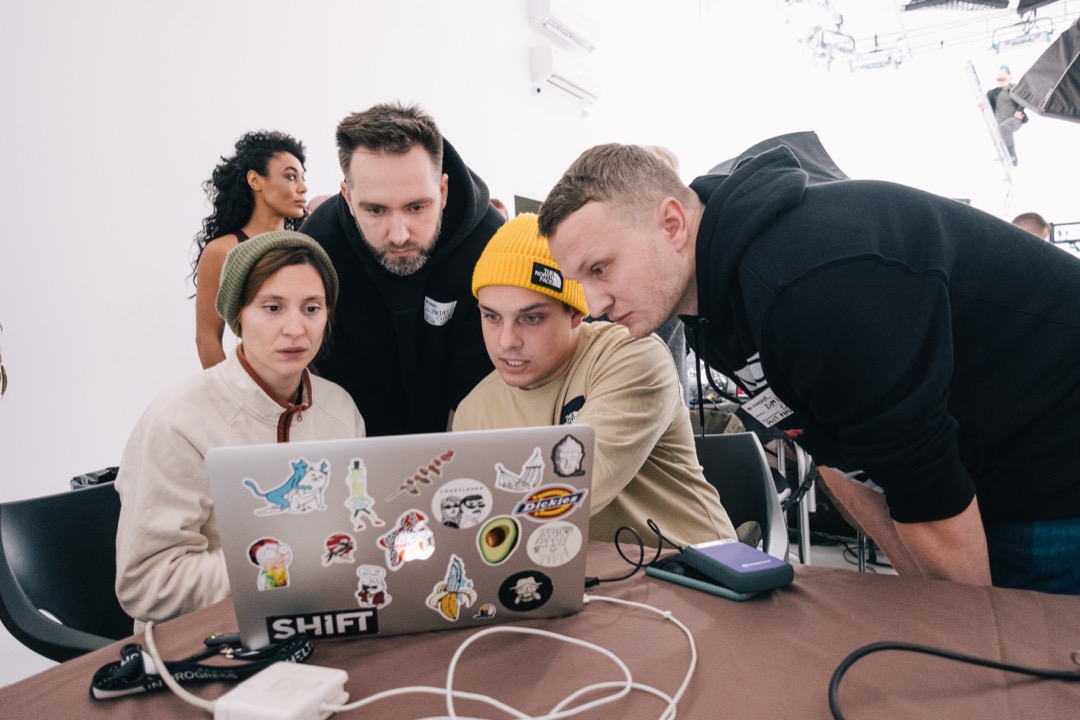
QTAKE handled playback and backup. Every exercise had a numbered reference. An editing director reviewed footage live on set — frame-divided for all formats — catching problems before they became post-production costs.
Lighting
Two locations, two lighting problems. Blackmagic URSA Mini Pro 4.6K G2 with 12 mm and 16 mm lenses — the same material working across phone, tablet, and TV layouts.
Studio — Soft, dimensional light
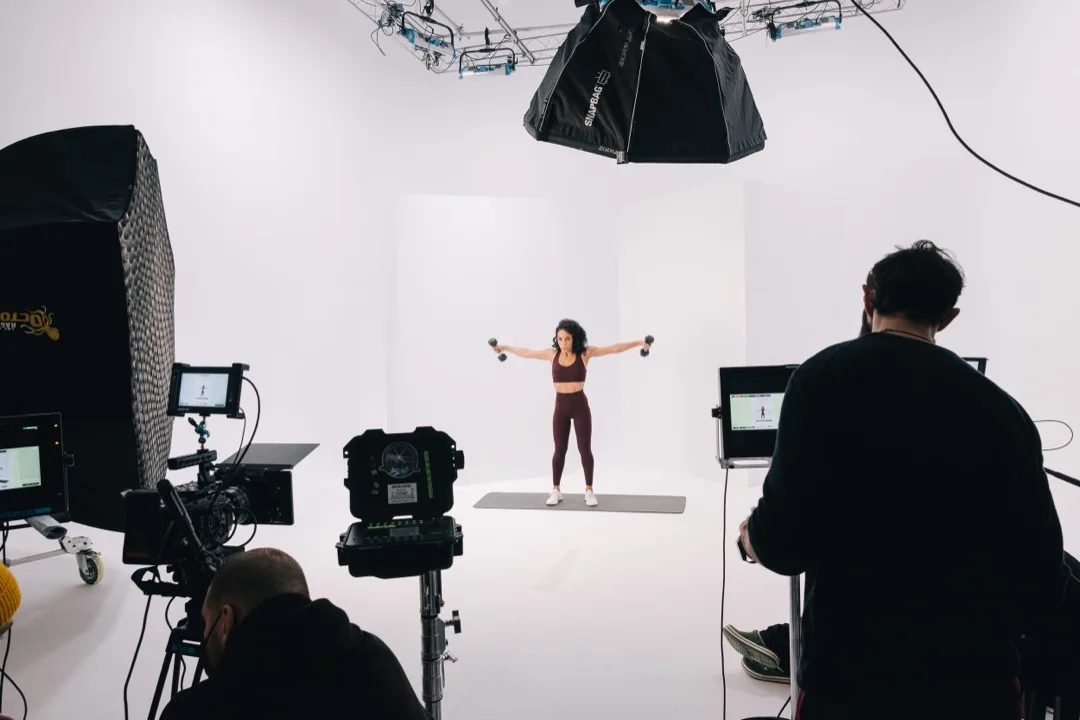
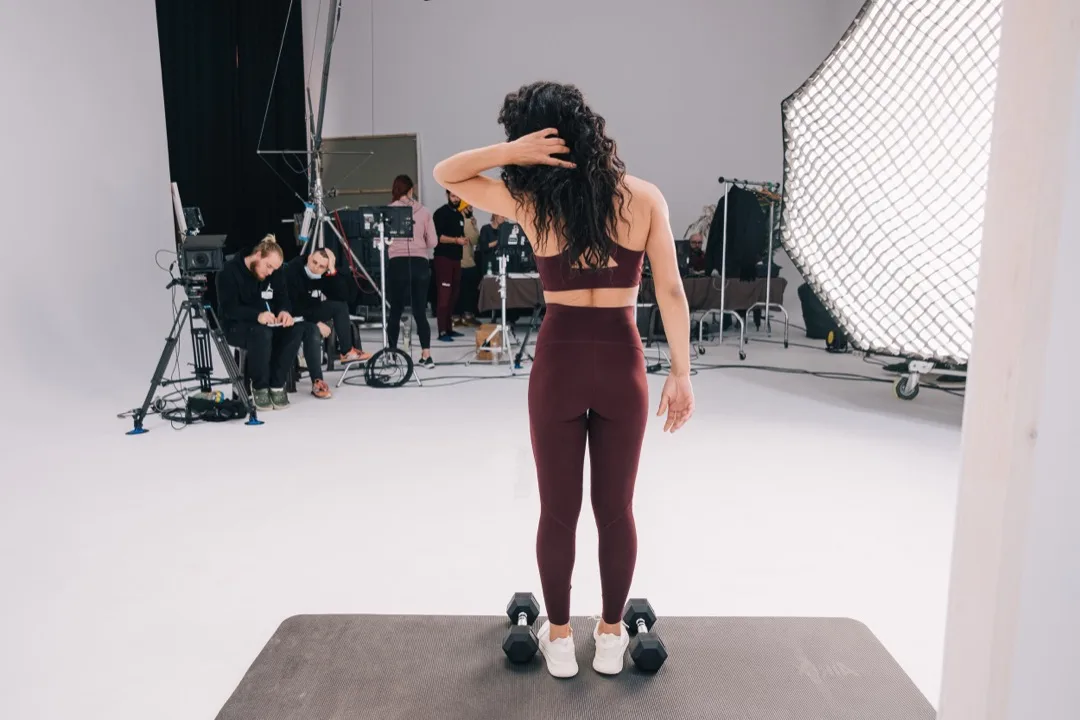
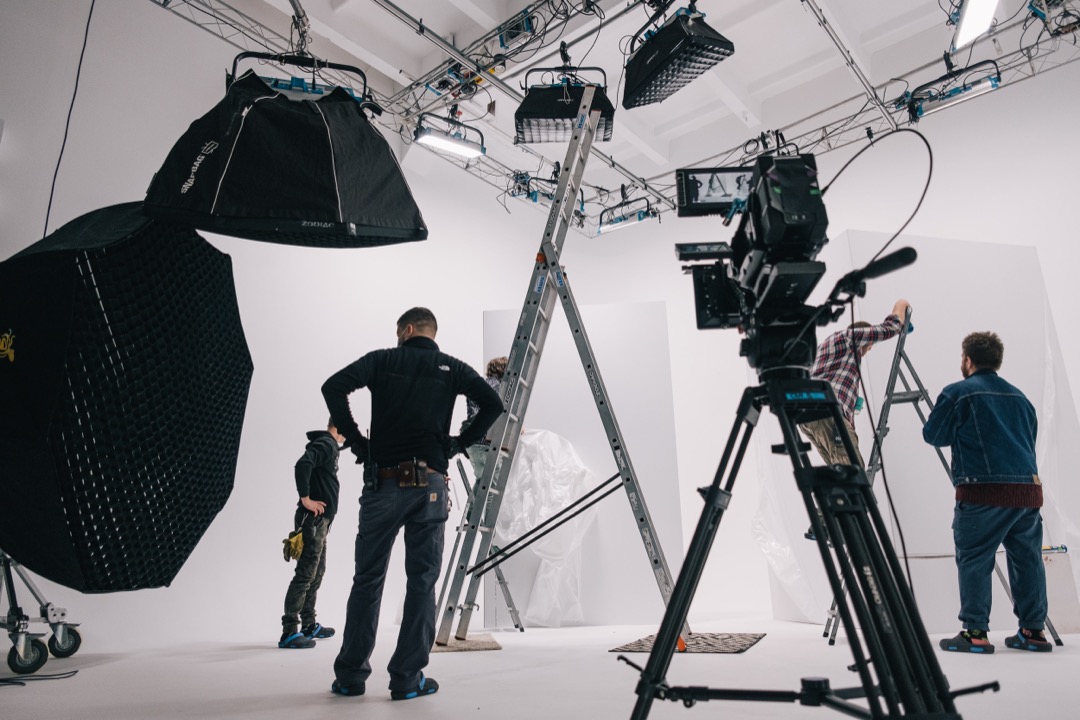
The studio needed a well-lit model without flattening the space. Lights were hung around the background to illuminate the main panels, while a large softbox created an even key on the athlete.
Gym — Fast scene changes
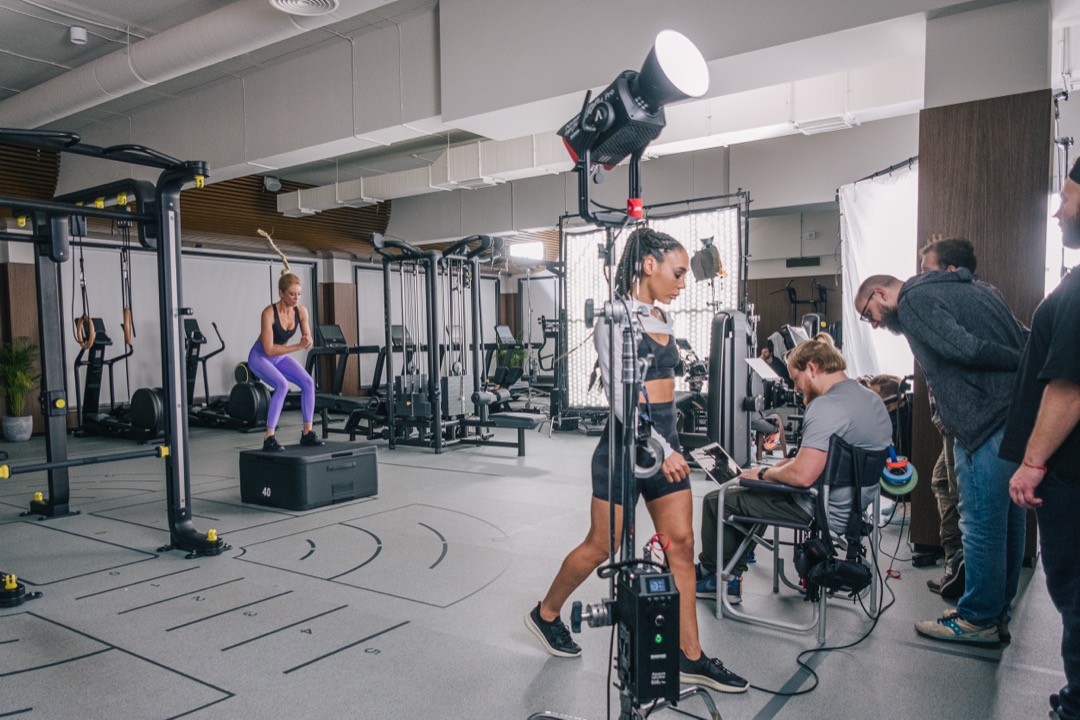
The gym had less space and five scenes to complete in one night. Each setup required moving light and two cameras, so extra lighting crew were added to speed up resets and keep the schedule under control.
Results
More output without extending the shoot.
360
Exercises per model — vs. 325 planned
5
Models filmed — one added mid-shoot as the schedule allowed
800
Edited videos delivered within a week of wrap
90h
Total shooting window
Story
Planning, production, review — told through the source material.
Test the light before day one
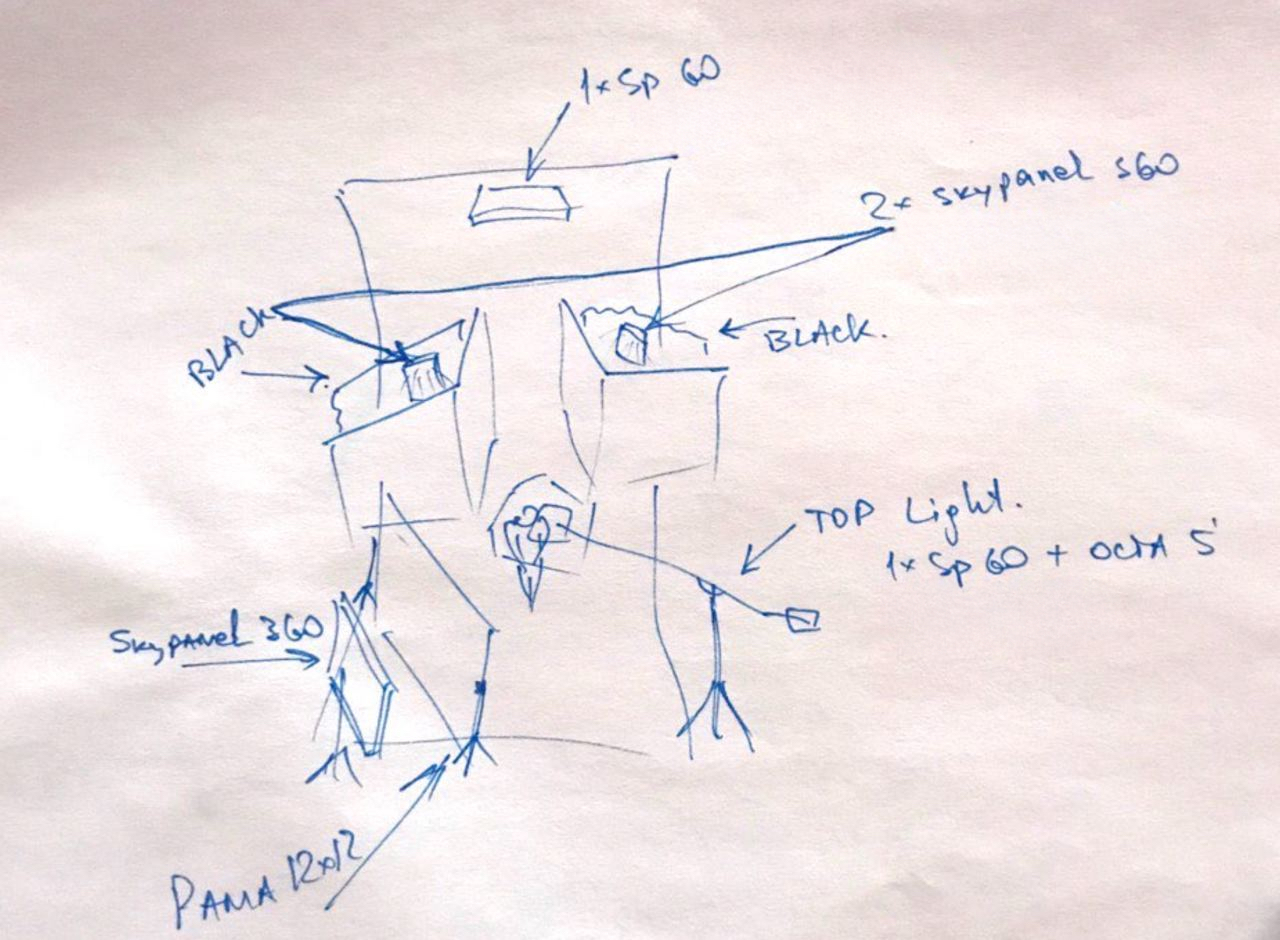
The test shoot saved time on the first production day because the lighting scheme had already been prepared. The sketch translated the studio into a practical setup: top light, side panels, black flags, and a clear plan for the crew.
Frame the system first
The production started with spatial planning: camera positions, background panels, future graphics, and the relationship between a moving body and three output formats. The draft render turns the studio into a system before filming begins.
Build the studio around movement
The white studio needed height, suspended lights, large panels, monitors, crew movement, and enough empty space to reset quickly. The set was designed to make every exercise feel clean, repeatable, and technically safe for post-production.
Capture movement clearly
Movement tests, live previews, mobile references, and jumping clips show the real production challenge: exercises had to stay understandable at different sizes and speeds, not only look good on the studio monitor.
Review while the set keeps moving
The team used playback, frame guides, and on-set editing to catch problems before post-production. That feedback loop helped turn a 90-hour shoot into a reusable workflow for future Zing Coach productions.